


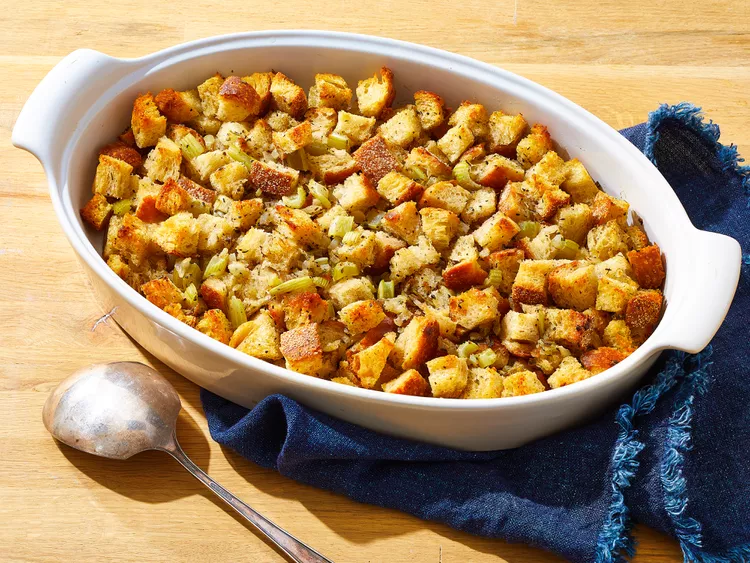
🍽️ The Ultimate Guide to Classic Homemade Bread Stuffing: Crispy Edges, Moist Centre
Stuffing, or ‘dressing’ depending on your regional allegiance, is more than just a side dish; it’s a quintessential culinary anchor for any holiday or family roast. While box mixes offer convenience, nothing compares to the rich, savory depth and perfect texture of a classic homemade bread stuffing recipe.
This article provides an expert breakdown of the classic preparation, ensuring a stuffing that achieves the perfect balance: a golden-crisp top layer and an incredibly moist, flavour-packed centre.
Key Ingredients: The Foundation of Flavour
The secret to superior stuffing lies in simple, quality ingredients and a focus on aromatics and herbs.
H2: Essential Ingredients for the Best Bread Stuffing
-
The Bread Base (12 cups, cubed): This is the most crucial component. Use a sturdy, day-old, or dried-out loaf. Sourdough, French bread, or Italian loaf are ideal as their dense crumb prevents the stuffing from turning mushy. Avoid soft, airy sandwich bread.
-
The Fat (1 cup / 2 sticks): Unsalted butter provides unparalleled richness. A generous amount is essential for sautéing and coating the bread cubes.
-
The Aromatics:
-
2 cups Chopped Yellow Onion
-
1.5 cups Chopped Celery (include the leaves for extra flavour!)
-
2-4 cloves Minced Garlic (optional, but highly recommended for depth)
-
-
The Herbs (Fresh is Best): The classic stuffing flavour profile is built on the ‘holy trinity’ of poultry herbs:
-
1 tbsp Fresh Chopped Sage
-
1 tbsp Fresh Chopped Thyme
-
1/4 cup Fresh Chopped Parsley
-
Alternative: Use 1-2 tbsp of a good quality Poultry Seasoning blend if fresh herbs are unavailable.
-
-
The Moisture and Binder:
-
2 cups Low-Sodium Broth (Chicken, Turkey, or Vegetable)
-
2 Large Eggs, lightly beaten (Acts as a binder, preventing a crumbly texture).
-
-
Seasoning: Kosher salt and freshly ground black pepper, to taste.
H2: Achieving the Perfect Stuffing Texture: The Drying Process
The single most critical step in this recipe is ensuring the bread is thoroughly dried. If the bread is too fresh, it will soak up the liquid and turn into a soggy paste, not a light, flavorful stuffing.
H3: How to Dry Your Bread Cubes
-
Air Drying (The Classic Method): Cut the bread into 1-inch cubes. Spread them in a single layer on a large baking sheet and leave them uncovered on the kitchen counter for 1 to 2 days.
-
Oven Drying (The Quick Method): Preheat your oven to a low 250°F (120°C). Spread the cubes on a baking sheet and bake for 45–60 minutes, stirring every 10–15 minutes, until they are dried out and crisp, but not browned or toasted.
H2: Step-by-Step Homemade Stuffing Recipe
Follow these steps for a guaranteed successful side dish that will steal the show at any dinner table.
H3: Stuffing Preparation and Cooking Instructions
-
Sauté the Aromatics: In a large skillet, melt 3/4 cup of the butter over medium heat. Add the chopped onion and celery (and garlic, if using) and a pinch of salt and pepper. Sauté for 5–8 minutes until the vegetables are soft and translucent, but not browned.
-
Combine Dry and Wet Ingredients: In a very large mixing bowl, combine the dried bread cubes, the sautéed vegetable-butter mixture, and all the fresh herbs (sage, thyme, parsley). Toss gently until the bread is coated in the butter and herbs.
-
Moisten and Bind: In a separate bowl, whisk together the 2 cups of broth and the 2 beaten eggs. Gradually pour this mixture over the bread and vegetable mix, tossing gently with your hands or a spatula. The key is moisture, not saturation. The bread should feel wet, but no liquid should pool at the bottom of the bowl. Add additional broth if needed, about $1/4$ cup at a time.
-
Transfer and Bake: Preheat your oven to 350°F (175°C). Grease a $9 \times 13$ inch or a 3-quart casserole dish with the remaining butter. Transfer the stuffing mixture to the dish, spreading it into an even layer.
-
Achieve Crispiness: Dot the top of the stuffing with the remaining cubed butter (about 2 tablespoons). Cover the dish tightly with aluminum foil and bake for 30 minutes.
-
Uncover and Finish: Remove the foil and bake for an additional 15–20 minutes, or until the top is golden brown and the interior reaches a safe temperature of 165°F (74°C). The uncovered bake allows the top layer of bread to crisp up beautifully.
Note: Stuffing baked inside a turkey should reach an internal temperature of $165^\circ \text{F}$ for food safety, as advised by culinary experts. Baking it separately, as a ‘dressing,’ is often preferred for superior texture and safety.
H2: Stuffing Variations and Pro Tips
While the classic recipe is a masterpiece, feel free to customise it to your taste.
-
Make it Meatier: Stir in 1 pound of cooked, crumbled sweet Italian sausage or bacon for a heartier dish.
-
Add Nuts or Fruit: For a textural and sweet-tart contrast, mix in $1/2$ cup of chopped pecans or dried cranberries with the herbs.
-
Dairy for Richness: Some traditional recipes call for adding a splash of milk or cream to the broth mixture for an extra layer of creamy richness.
This ultimate homemade bread stuffing recipe is guaranteed to be a hit, providing the savory, herbaceous counterpoint that elevates any meal. The intentional step of drying the bread and the generous use of butter are the non-negotiable elements for a truly memorable dish.